

Interview with Luke Feldman
Originally published 2009. Updated March 2026.
Luke Feldman’s illustrations are the kind of work that stops you mid-scroll. Vibrant colour, razor-sharp line work, and a naivety that feels entirely deliberate — the SKAFFS universe is unmistakably his.
His client list spans Coca-Cola, Apple, Disney, and Facebook. His work has been exhibited internationally. He has written and illustrated his own book. And it all started with a sketchbook and a vivid imagination shaped by childhood.
We asked Luke to walk us through his process, his philosophy, and what advice he would give to students trying to find their own visual voice.
Once you have read his take on developing a unique style, our digital characters tutorial — contributed by Luke himself — is the logical next step.


Welcome to The Graphic Design School blog. Tell us a little about yourself.
Luke Feldman — the creator of SKAFFS — is an Australian multimedia designer who creates for a multitude of platforms. Inspired by childhood experiences and a vivid imagination, his illustrations and animations are distinctive: defined lines, elaborate detail, intensely vibrant colours.
SKAFFS is a collection of work spanning art, animation, games, giant vinyl adhesives, skate decks, and collector toys.
Luke’s technical experience developed across numerous mediums. He studied Visual Arts and Multimedia in Australia and has worked across gaming, education, and animation — from graphic design and illustration to computer animation, mobile media, website design, character design, installations, and advertising.
While the scope of his work is extensive, a unique and dynamic style binds it together. That style has led to a number of awards, exhibitions, and collaborations with high-profile artists including Theodore Geisel and Maurice Sendak, and companies such as Disney, Coca-Cola, and Facebook.
“Luke Feldman’s artwork blends the classic stylings of 1950s Disney with a modern design sensibility to create something both cutting edge and timeless.” — Andrew Farago, Manager & Curator, San Francisco Cartoon Art Museum
“One might contend that Feldman is to digital art what Tim Burton is to cinema, or Dr. Seuss is to children’s books — each artist has a distinctive, unmistakable style.” — Hans Fink, Skinnie Magazine, Los Angeles
“Luke Feldman’s instantly recognisable SKAFFS creations comprise a heady mix of bright colours and razor-sharp style, mixed with an almost tangible naivety that makes his illustrations easily identifiable in a world where originality is not as easy to find as you might think.” — Jo Spurling, Editor, Desktop magazine
What was the most valuable lesson you had while studying?
Interactive design was probably my favourite subject — learning Illustrator and Photoshop and how to mock up designs. But the most enjoyable moment was an electronic design project where I had to concept, design, and develop a computer game, and present it in finished form including the packaging.


How did that project shape your work today?
It helped me see the big picture — what is actually involved in taking something from concept to finished product. Today, as a creative director consultant, my work is predominantly taking a brief, fleshing it out into a concept, and developing it into a full functioning product: game, mobile content, interactive campaign.

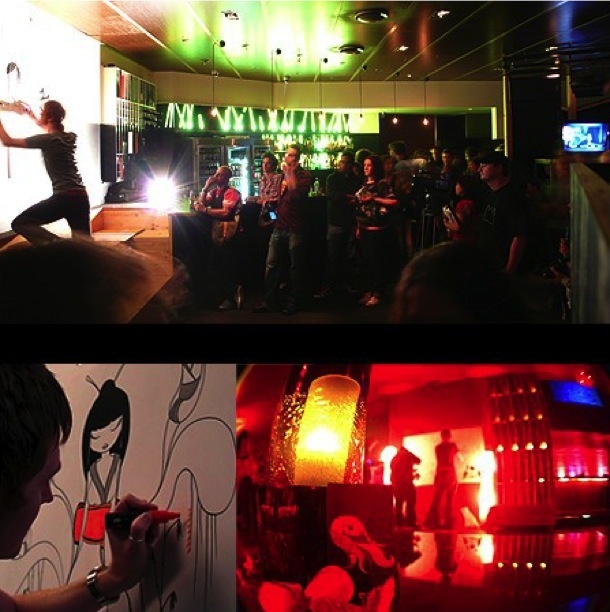
Describe your style in a few words. What advice would you give students who want to develop their own?
My style is based on symmetry, flow, and vibrant colours.
My advice: develop a unique style, perfect it, then experiment by adapting it to as many platforms as you can. The style you develop in one medium will inform what you do in every other. Versatility becomes easier once you know what makes your work yours.


Do you use hand-drawn techniques in your design process?
Everything I do starts as a hand-drawn sketch. It is very important to be able to translate ideas into physical form.
Freehand drawing is an important skill because it is often the first thing you show future clients — and you need to win them over with the concept before anything is built. The sketch is the pitch.
Do you keep an ideas journal?
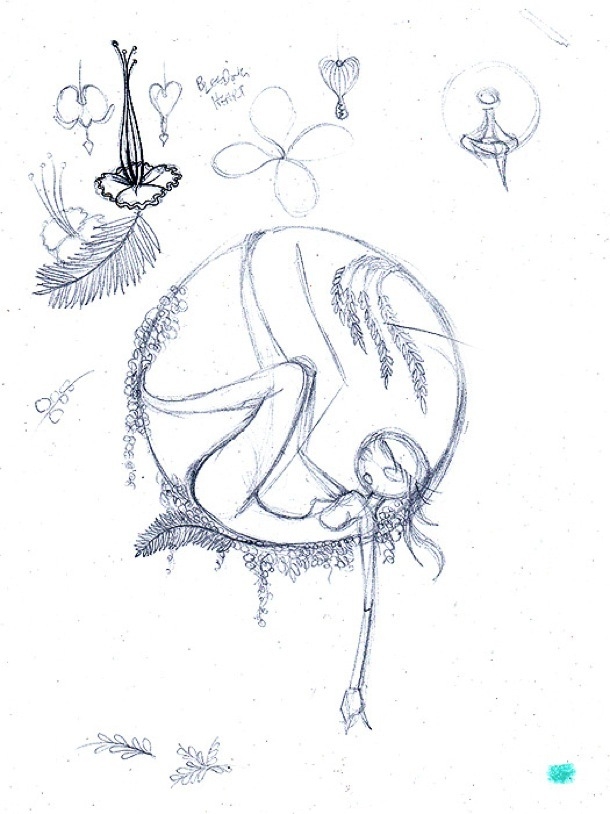
I have a trusty sketchbook that I carry with me at all times. Ideas can come to me at any moment, and I need to capture them before they disappear. These books also come in handy when thinking of concepts to pitch to clients. Below is a preview.

What are your favourite websites and resources at the moment?
Kirupa — animation and interactive design tutorials worth bookmarking.
Vector Tuts Plus — great vector technique resources.
Who are your five all-time favourite graphic designers?
McBess and James Jean are two who have shaped my thinking.


McBess — also featured in our European design websites post.

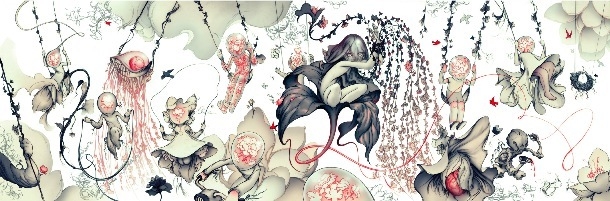
James Jean — painter, illustrator, and a constant source of reference.
What typefaces do you use most often?
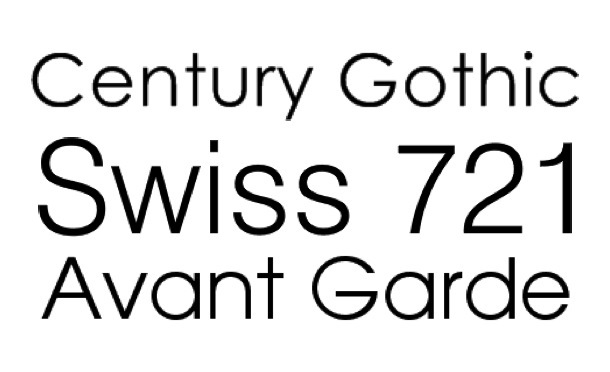
I change fonts depending on the brief. But my most commonly used are Century Gothic, Swiss 721, and Avant-Garde. I have also created my own fonts when a project required something more specific.

What do you find most rewarding about your work?
Developing a concept into a finished product. I also love the challenge of adapting my style across platforms — from print, to broadcast, to mobile, to wall installations.
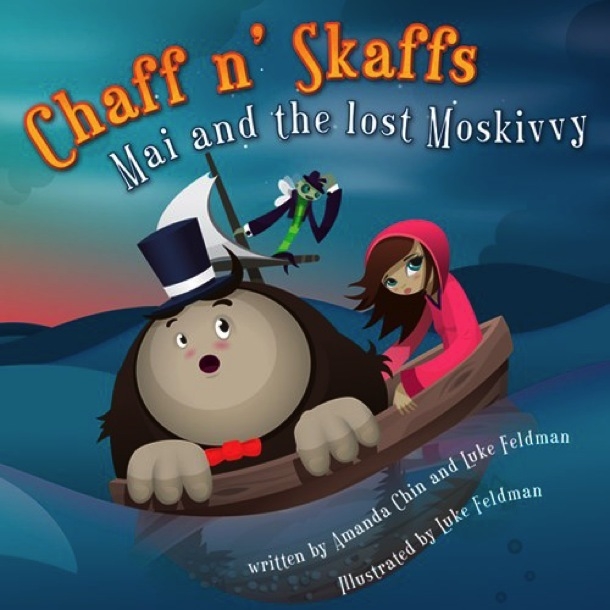
I have been fortunate enough to have written and illustrated my own book through San Francisco-based publisher Immedium: Chaff n Skaffs: Mai and the Lost Moskivvy. I completed all the graphics, every page a finished piece of artwork, plus all the text layout and graphic design.
I have developed giant wall installations for LA stores, and have built my own product line of skate decks, artwork, collector toys, and iPhone applications.

A moment to brag — who are your most prestigious clients?
I have worked with some great companies. The most memorable: designing the 2007 advertising campaign for Coca-Cola, the 2008 Apple Mac World 1-storey conference booth, animation design concepts for Disney, and developing interactive content for Facebook.
Where do you see your career going?
I hope to keep growing as a multimedia designer and continue working with great companies on fun and challenging projects. And to keep developing the SKAFFS line of products.


What advice would you give to graphic design students about building a great portfolio?
A great portfolio matters. Take real time to put one together.
Ensure your work has a distinct style — but show diversity in how you apply it. Confidence in your own work is essential. And do not give up when the work feels wrong; that discomfort is usually where the growth is.
For more on this, see our full guide to putting together an effective portfolio.
How do you feel when you are designing?
Designing energises me. It is as if my design field becomes frenzied and the world around me stops. I don’t feel hungry. I don’t feel tired. I don’t feel thirsty.
Any famous last words?
Thank you!
Luke has also contributed a practical tutorial for students: How to Create a Finished Vector Character — a hands-on guide to vectoring one of his characters, start to finish.


At The Graphic Design School, we have been teaching graphic design online since 2008. If Luke’s approach to building a distinctive personal style resonates with you, our Certificate IV in Graphic Design is a great place to start developing yours — fully accredited, self-paced, and supported seven days a week.
Ready to start your design career?
Study graphic design online, at your own pace, with 1:1 support from our Support Angels. Accredited RTO since 2008.
Explore our courses