

Mind Maps for Graphic Design :: Ideas Generation Techniques
Originally published 2009. Updated March 2026.
The most difficult part of being a creative is idea generation. It is why there are so many imitators out there — coming up with something genuinely original is hard. There are several methods for brainstorming, and most designers develop a toolkit of techniques they return to again and again.
Mind mapping is one of the most reliable. It has been around since the 1970s, and its popularity keeps growing. So what is it, exactly? And how does it apply to graphic design?
What Is a Mind Map?
A mind map is an intricate web of thoughts, ideas, names, words, and images that all stem from one central idea or word, laid out in diagram form. Think of it as a visual conversation with yourself.
Many designers use mind mapping to brainstorm and generate ideas. The loose, visual manner in which a mind map takes shape is a fantastic tool for freeing up creativity. It is also an effective way to communicate with clients, team members, and lecturers during a design’s concept phase. Where a list narrows your thinking, a mind map opens it up.
Mind Mapping: A Crash Course
Before looking at mind mapping as a design tool, consider a mind map on a topic we are all familiar with.
In the example above, the author has started with a central topic — “Solving Global Warming”. The main points radiate outward from the centre. These represent the primary branches of the map. Each branch then sprouts its own sub-branches. This star-like pattern of ideas is known as “radiant thinking”.
The beauty of the method is that it mirrors how the brain actually works — by association, not by linear sequence. One idea triggers another, which triggers another. A mind map captures that process on paper.
Getting the Creative Juices Flowing
Mind mapping expert Paul Foreman has dedicated years to the study of mind mapping. In his e-book Idea Creation, he shares a philosophy for opening up your mind to the creation of ideas through mind mapping:
- Everything stems from a thought
- Every thought is a word
- Every idea is a thought
- Every word is a potential idea
- Every image is a potential idea
- Good thoughts come when bad thoughts stop
- Good ideas come when bad ideas go
- You flick your brain’s switch to “on” when you stop overthinking
- Once you still the mind, ideas come
- Patience allows time for ideas to evolve
- Preconceived notions only breed preconceived ideas
- Stretching your mind is effortless and simple
- Saying “I can’t think of anything” really means “I think I can’t think of anything”
- Ideas don’t dry up — thoughts do
There is something freeing about that last point. The ideas are always there. It is only our thinking that gets in the way.
Mind Mapping in Graphic Design
So, now that you know a little about how mind mapping works — how can you use it when generating design ideas?
We spoke to Damien Horan, a graphic designer known for his work with international surf brands Mambo, Volcom, and Insight, and a successful freelancer in his own right.
Damien recently designed the logo and branding for “Little Avalon”, a restaurant and bar named after a local surf break on Sydney’s Northern Beaches. Having lived and surfed in the area for years, Damien understood the local surf culture intimately.
Working alongside Mambo graphic designer and artist Jim Mitchel, Damien developed the concepts and ideas for the bar. The challenge was clear: owner Shane Clinton wanted the ambience of a chic inner-city bar combined with the familial warmth of a local surf shop. The branding needed to bridge city and surf. Not an easy task.
Damien received his client brief and used its key points to define the mind map’s main branches. Research findings and images were then applied to the outer branches. Mapping these words and images visually helped reveal connections between seemingly unrelated ideas — creating a detailed yet easy-to-read picture of everything the logo needed to encompass.
Points realised through the process:
- The typeface needed serifs that echoed the organic shape of a wave
- Inspired by a black-and-white photograph of the area, the colour palette became deliberately restrained — crisp black and white
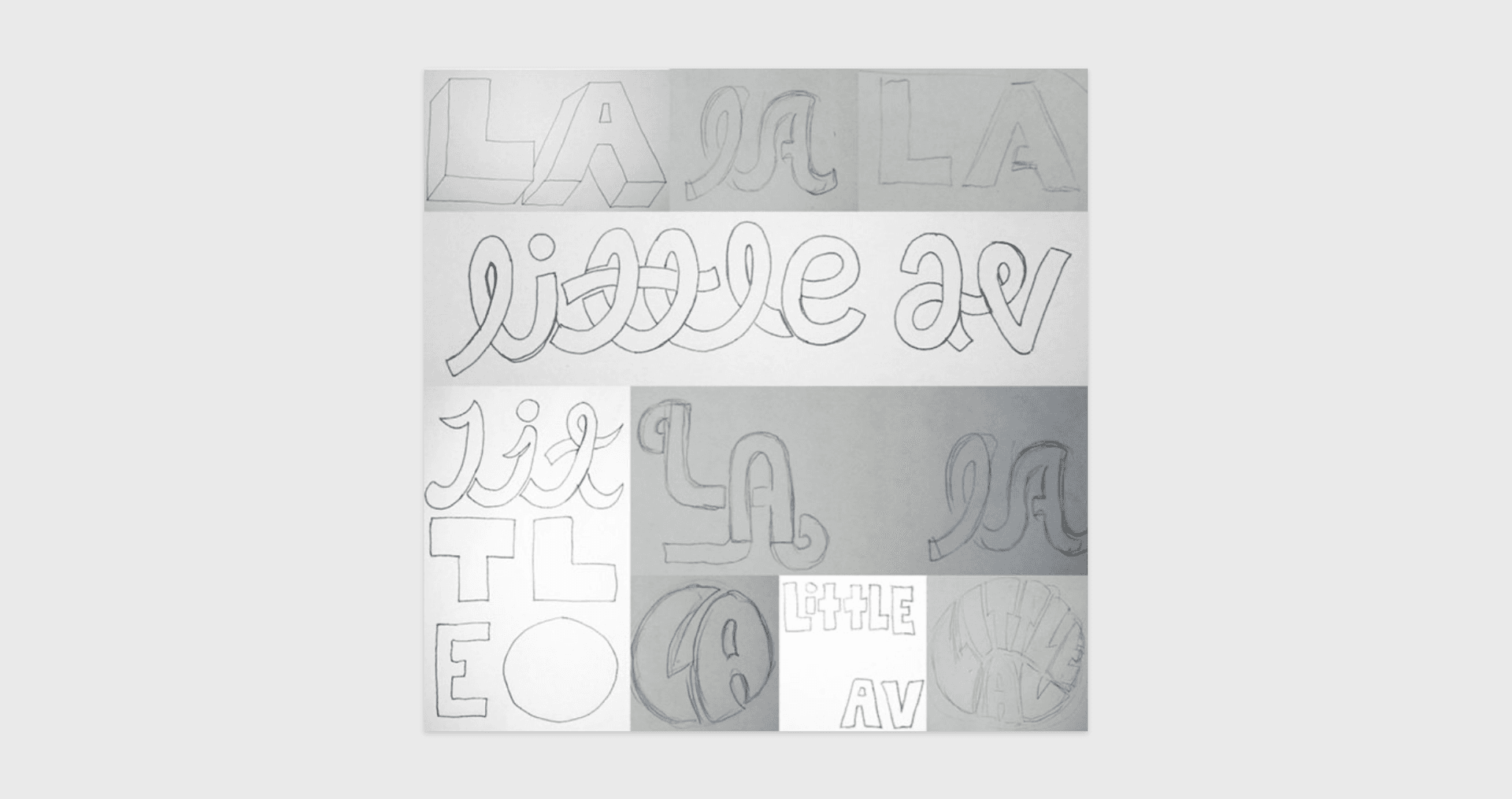
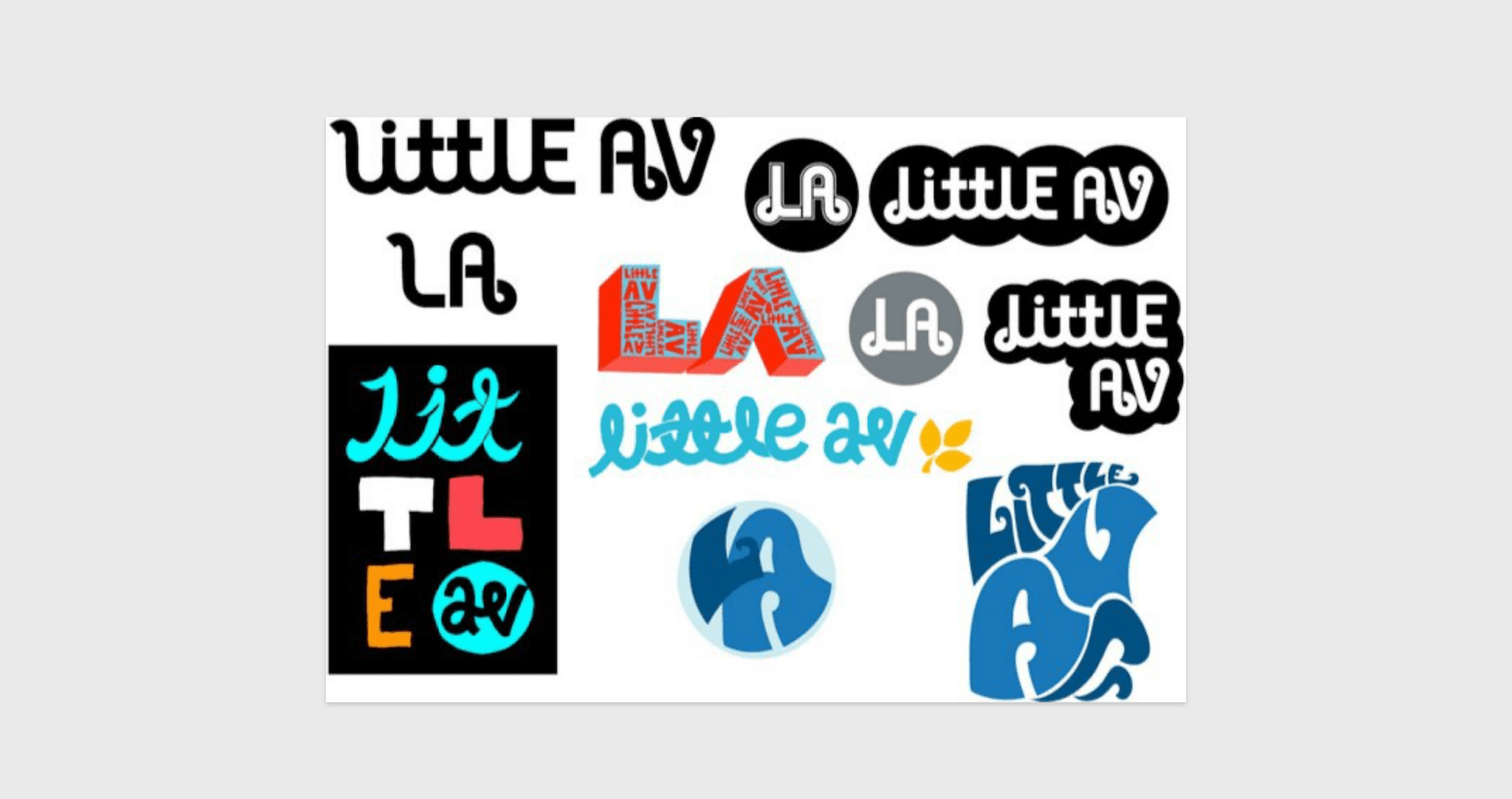
- Exploring typefaces with curved serifs, Damien was inspired to create his own custom font
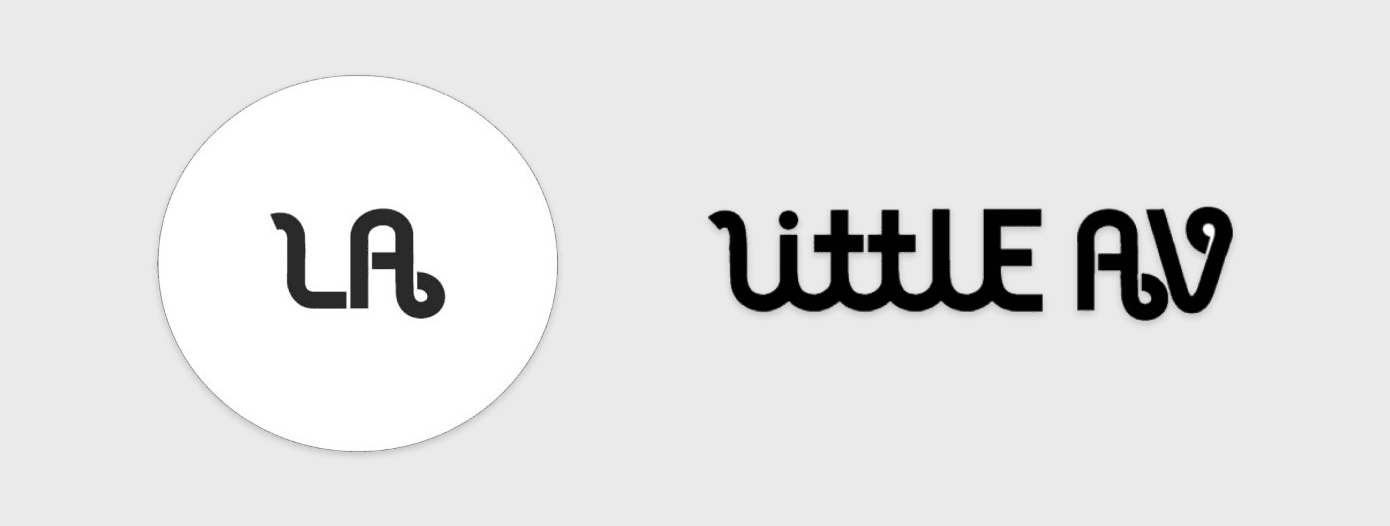
- “LA” was the locals’ shorthand for the surf break, making it essential to the branding
- The “LA” mark and “Little Avalon” wordmark were designed to work independently of each other
For more on working with client briefs like the one that guided this project, see The Creative Brief Part 1 and Part 2.
Damien’s Working Sketches
Hand-Drawn Sketches

Computer Comps

Final Logos

Application




You can see from this example how a mind map might serve you in your career or during your studies. Idea generation is only one step in a much more involved design process — but it is a step worth getting right. For how mind mapping fits into the larger project workflow, see Project Planning.
Unlike many brainstorming methods that encourage refining a single concept from the start, a mind map does the opposite. It helps you think holistically about a problem and tackle it from all sides. Most designers use more than one brainstorming method, but mind mapping is one of the most reliable ways to get the creative juices flowing.
Mind Mapping Beyond Design
David Kelley, founder of IDEO — one of the most innovative design firms on the planet — uses mind maps to foster creativity. IDEO designed the Apple mouse, the first laptop computer, and the Palm V. Mind maps are a popular thinking tool in Silicon Valley.
Kelley says:
When I want to do something analytical, I make a list. When I’m trying to come up with ideas or strategize, I make a mind map. Mind maps are organic and allow me to free associate. They are great for asking questions and revealing connections between seemingly unrelated ideas. I start in the centre with the issue or problem I am working on and then as I move farther away I get better and better ideas as I force myself to follow the branches on the map and in my mind.
That last point is worth highlighting: the best ideas often appear at the outer edges of the map, not at the centre. You have to push past the obvious to reach them.
Oprah magazine featured a piece on mind mapping and idea generation, noting:
Forget making a list! Lists often come from the organised, analytical left side of your brain, and to solve an intractable problem, you want to engage the right, the creative side. Make a mind map instead. Get a big piece of paper and start in the centre with a circle that contains the original problem. Write different solutions, and follow paths outward on the page, limb by limb, pushing beyond the obvious.
Modern Mind Mapping Tools
The principles of mind mapping are the same whether you work on paper, a whiteboard, or a screen. But digital tools have made it easier to collaborate, iterate, and share your maps.


Digital tools worth trying:
- Miro — collaborative whiteboard with mind mapping templates, excellent for team brainstorming sessions
- FigJam — Figma’s whiteboard tool, ideal if you already work in Figma for your design projects
- MindNode — a polished mind mapping app for Mac and iOS with a focus on simplicity
- Pen and paper — never discount the original. A large sheet of butcher’s paper and a handful of markers remain one of the best ways to map ideas without the temptation to edit as you go
AI tools like ChatGPT can complement mind mapping rather than replace it. Use AI to generate starting points or expand a branch you are stuck on — then bring those prompts back to your map and see where they lead. The mind map remains yours; AI is one more input feeding into it.
Further Reading
Articles:
- A Mind Map From IDEO’s David Kelley, Business Week
- The Mind Map: Six Steps to Get Your Creativity Flowing, Oprah Magazine
Galleries and resources:
Blogs:
Books:
- How to Think Like Leonardo da Vinci: Seven Steps to Genius Every Day by Michael Gelb
- Mind Maps at Work by Tony Buzan
Free templates:
Paul Foreman from Mind Map Inspiration has generously shared an e-book with 22 mind map templates. Download the free template e-book here.
Want to develop your creative thinking alongside practical design skills? The Certificate IV in Graphic Design at The Graphic Design School covers ideation techniques as part of a broader design education — with the support of our Support Angels at every step.
Ready to start your design career?
Study graphic design online, at your own pace, with 1:1 support from our Support Angels. Accredited RTO since 2008.
Explore our courses