

Get off the screen, roll up your sleeves and get making.
Originally published 2010. Updated March 2026.
Make the most of the analogue and craft disciplines offered through design education. Take those skills with you into the working world.
The computers we work on are remarkable tools. We await new releases with impatience, learn software inside out, and — if we are honest — spend more time in front of screens than at any other point in the history of the profession. Graphic design has become, almost completely, screen-based work. The modern designer need never sketch a rough by hand or set type on layout paper. Everything can be done digitally.
In 2026, this is truer than ever. AI tools can generate visual concepts, layout variations, and colour schemes at a speed no human hand can match. The efficiency argument for staying on screen has never been stronger.
And yet.
There was a time when graphic design was a very physical profession. Drawing boards. Airbrushes. Magic markers. Inks. Layout pads. Lightboxes. Silk-screen printing. Linocutting. Collage. Drawing.
What is most striking about this is how recent it all is. These are not practices from William Morris’s Kelmscott Press. Designers and tutors in their forties and fifties will have direct personal experience of these processes — some of them used them professionally. The shift to screens happened within living memory.
Design schools, for the most part, still offer students a chance to work with some of these processes. That fact deserves celebrating. It provides an anchoring in an analogue tradition that enriches everything you do digitally. And good courses — ones designed with this in mind — recognise that thinking outside the screen is not nostalgic backwardness. It is sound practice.




www.flickr.com/people/grandadmiral/
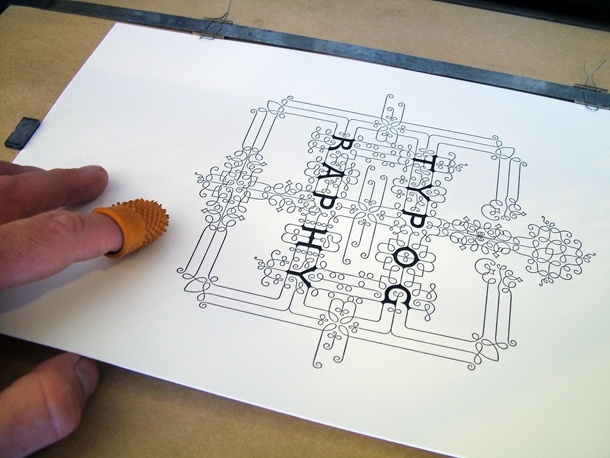
During my own final year of study, I decided I wanted to learn letterpress printing and use it for my major end-of-year project. My course leader was as enthusiastic as I was, and had connections to a fine printing press in Wales. Within a month I had been sent there for an intensive, hands-on introduction.
I emerged two weeks later having learned to design, handset, compose, and print using letterpress — and returned home with two posters for the end-of-year show. That was scarcely enough time to master the discipline. But it gave me an initiation that I have continued to build on.
Clients and other designers consistently single out those handmade pieces for praise. Not the commercial work — the letterpress posters and the hand-printed projects. That observation has never stopped being useful.


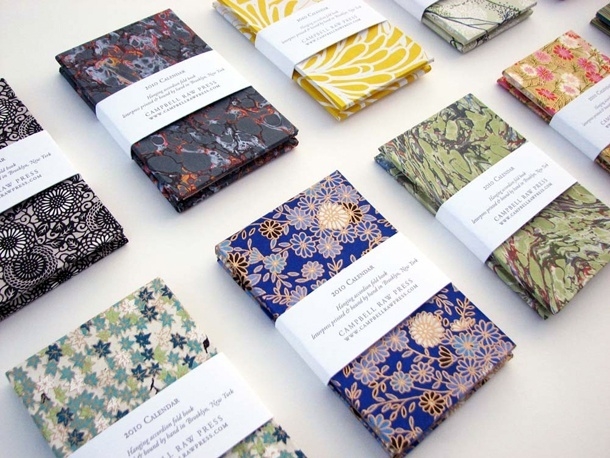

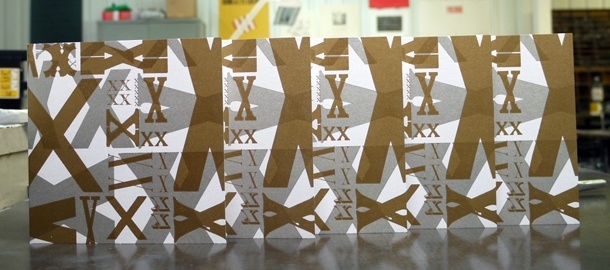

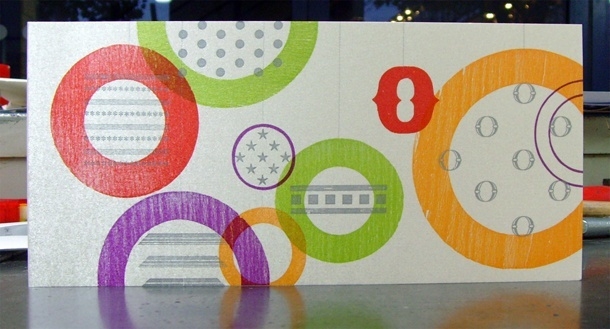
Once you are working — inhouse or within a studio — the screen beckons long and hard. You will spend most of your professional hours there, and that is fine. Within it, through the artworking and the graft and the occasional tedium, you will glimpse moments of real satisfaction: a job back from the printers, an idea approved for a project.
But amidst all that, maintain some connection to the physical. Sketch out roughs with a pencil before going to the screen. Suggest letterpress for that album cover. Look for the project where handmade production adds something the client cannot get elsewhere.
Why This Matters More in 2026
The AI conversation has clarified something that the letterpress revival of the 2010s only hinted at: what humans bring to design is not efficiency. Machines are more efficient. What we bring is judgment, sensibility, and — crucially — the ability to make things that carry the evidence of human effort.
A letterpress print holds that evidence in its impression, its ink lay, its registration. A hand-drawn sketch carries it in every line. These are not deficiencies to be corrected by software. They are qualities that digital processes cannot replicate, and that clients and audiences still respond to.
Adrian Shaughnessy put it clearly: “The computer has revolutionised the design process. It has made the act of designing easier, and in many ways it has improved the way we design things. Yet in other respects it has made design more formulaic, and it has standardized the act of designing.”
Those words were written before AI entered the picture. They are even truer now.

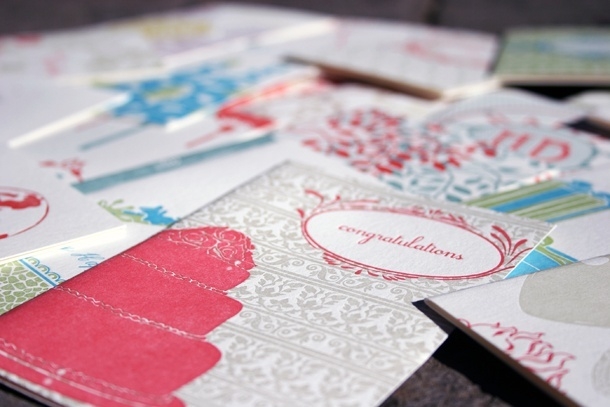

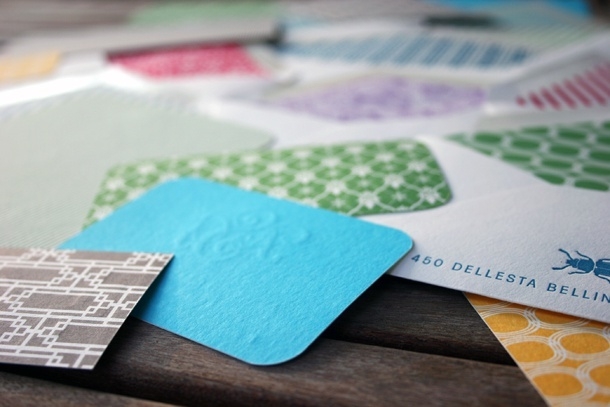
There is now more appreciation for the handmade than there was twenty years ago, when the age of the Mac had only just become prevalent and Photoshop had still to fully catch on. Disciplines like letterpress and traditional drawing are enjoying a sustained appreciation — not as nostalgia, but as a genuine recognition that these methods produce qualities worth having.
People value the tactile and the handmade, when it is done well. By maintaining this kind of practice alongside your screen work, your professional life will be richer and more varied than it would be if you stayed entirely digital.
Where to Start
If you are a student, use the time and resources available to you now. Take the letterpress class. Learn screen printing. Build things with your hands. These opportunities become harder to find once you are working full-time.
If you are already in practice, find one analogue process to revisit regularly. Sketching is the lowest barrier to entry. From there: linocutting, screen printing, bookbinding, risograph. None of these require large investments.
The point is not to produce handmade work for every brief. It is to keep the connection alive — so that when the right project comes along, you have the vocabulary to propose it, and the skills to deliver it.
For more on building a distinctive design practice, see our posts on portfolio development and creative thinking tools like mind maps. And if you want to study in an environment where making things — not just designing on screen — is part of the curriculum, get in touch with us.
Have questions about studying design?
Our Support Angels are here to help. Ask about courses, enrolment, fees, or anything else — no pressure, just honest answers.
Talk to our Support Angels