

The Creative Brief :: Part 2
Originally published 2014. Updated March 2026.
In Part 1 we discussed the role of receiving and understanding the creative brief — a vital part of the designer’s job. Once the document has been digested and the nettle grasped, one of the most enjoyable parts of the creative process may begin: research and mind mapping.
This is the stage where, empowered by a belief that anything is possible, the designer can delve fully into their subject, unleash their imagination and give full rein to their creativity — without fear of being pulled up short by the client (that might come later).

Checking against the brief
It’s not a totally unrestrained part of the creative process, though. Throughout, you’ll have to check your progress against the original brief. Not doing so can result in a wrong turn — and the possibility of that cardinal sin: not meeting the needs of the brief.
Working on a project in the early stages of my career, I took a pretty erratic divergence from what was discussed in the early meetings and, predictably, was pulled up short by the client. There was nothing wrong with the work I had submitted. It just didn’t answer the brief.
So…
Let’s return to the brief I provided as an example in Part 1. It stated that the desired aim was for the new entity to look fresh and crisp, though in a sense established. Some sort of visual link to the existing — already very well established — accountancy entity would also have to be provided. Reconciling these two demands was the unique question I was being called upon to answer.

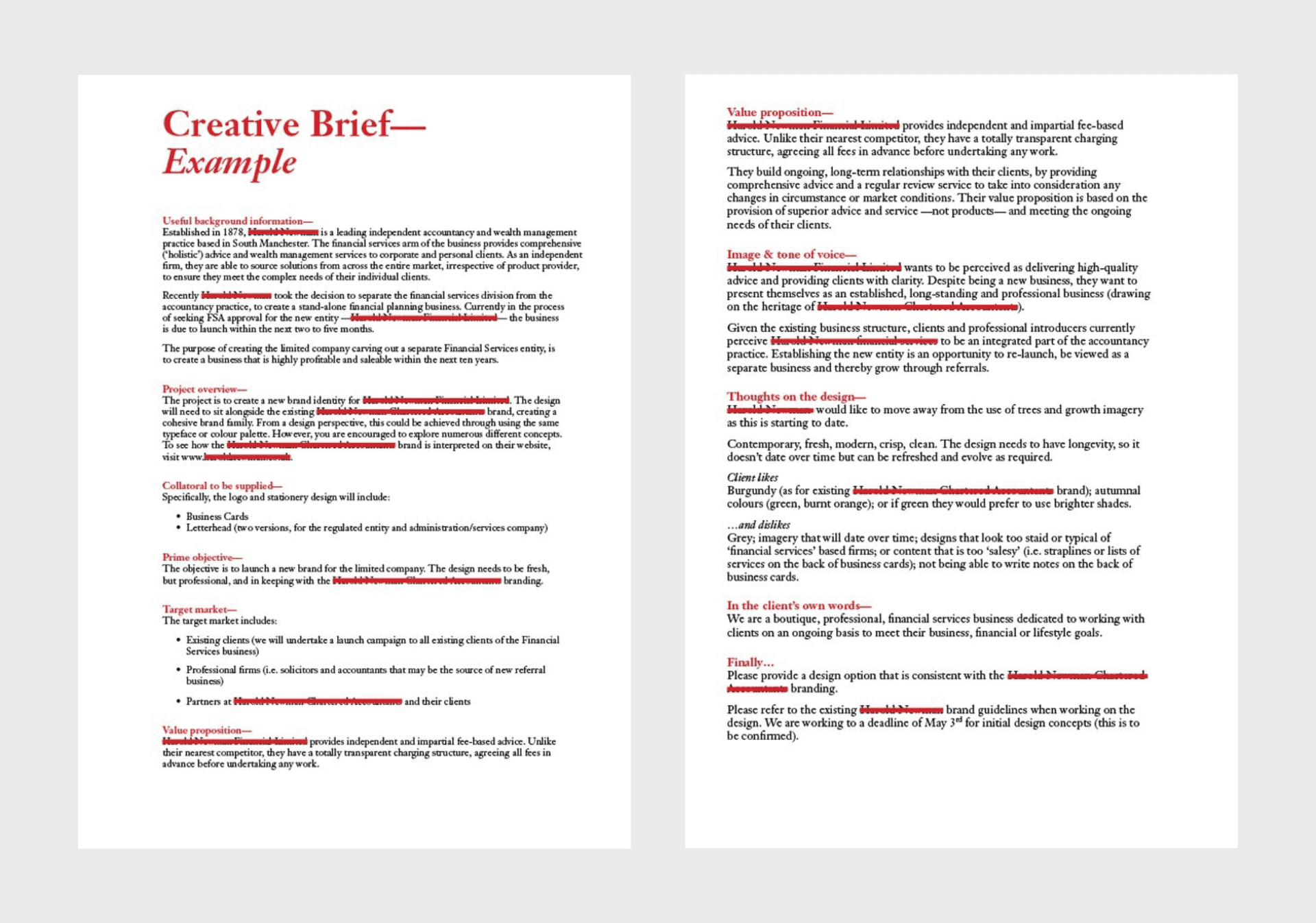
Establishing a link between the new company and old was straightforward. The existing corporate burgundy, when modified, was a strong and appropriate colour choice — so I carried it over into the new identity and introduced a secondary palette of autumnal colours alongside it.
But back to research…
Which, as I described above, is one of the most enjoyable parts of the job. My particular client was based in Manchester — a city famous for its bygone docks and textiles industries, and more recently its redeveloped Salford Keys district. These aspects of the city offered enormous graphical potential. I put it to the client that any new identity should have at its core something uniquely Manchester about it.
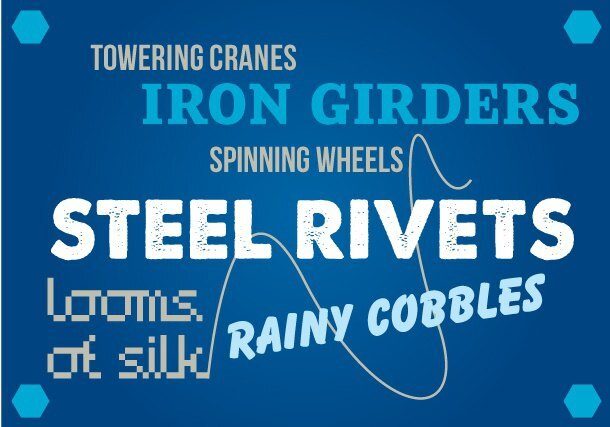
This accepted, I threw myself into finding out everything about England’s second city I could. Quickly I found my mind swimming in imagery of iron girders, spinning wheels, cranes, looms of silk, rainy cobbles and steel rivets. More than enough material to make a start.
And make a start I did, experimenting with every possible shape, type treatment, colour combination and juxtaposition I thought might work. It’s unlikely you’ll do quite as much sketching and brainstorming as during this stage of the creative process.

The key to my particular project lay in the personality of the city in which the company was born, so my research largely sprung from that starting point. But factors will vary project to project. Other good areas to consider:
- The sector your client belongs to. Research how their competitors have handled their branding and identity — then look for a way of treating yours differently and creatively
- The themes and messages your client wants to project. Try to obtain keywords and qualities from them and look for ways of exploring these. If solidity is important, you might explore masonry shapes and produce concepts shorn of superfluous ornament. If tradition is a must, heraldry might be a good starting point
- Don’t bombard the client with too many concepts, even at an initial stage. I chose from my dozens of vector sketches six or eight marks which I thought had the strongest potential for development. ‘Pearls,’ to paraphrase Alexandre Dumas. ‘Rough, shapeless pearls, of no value, waiting for their jeweller’
Mind Mapping

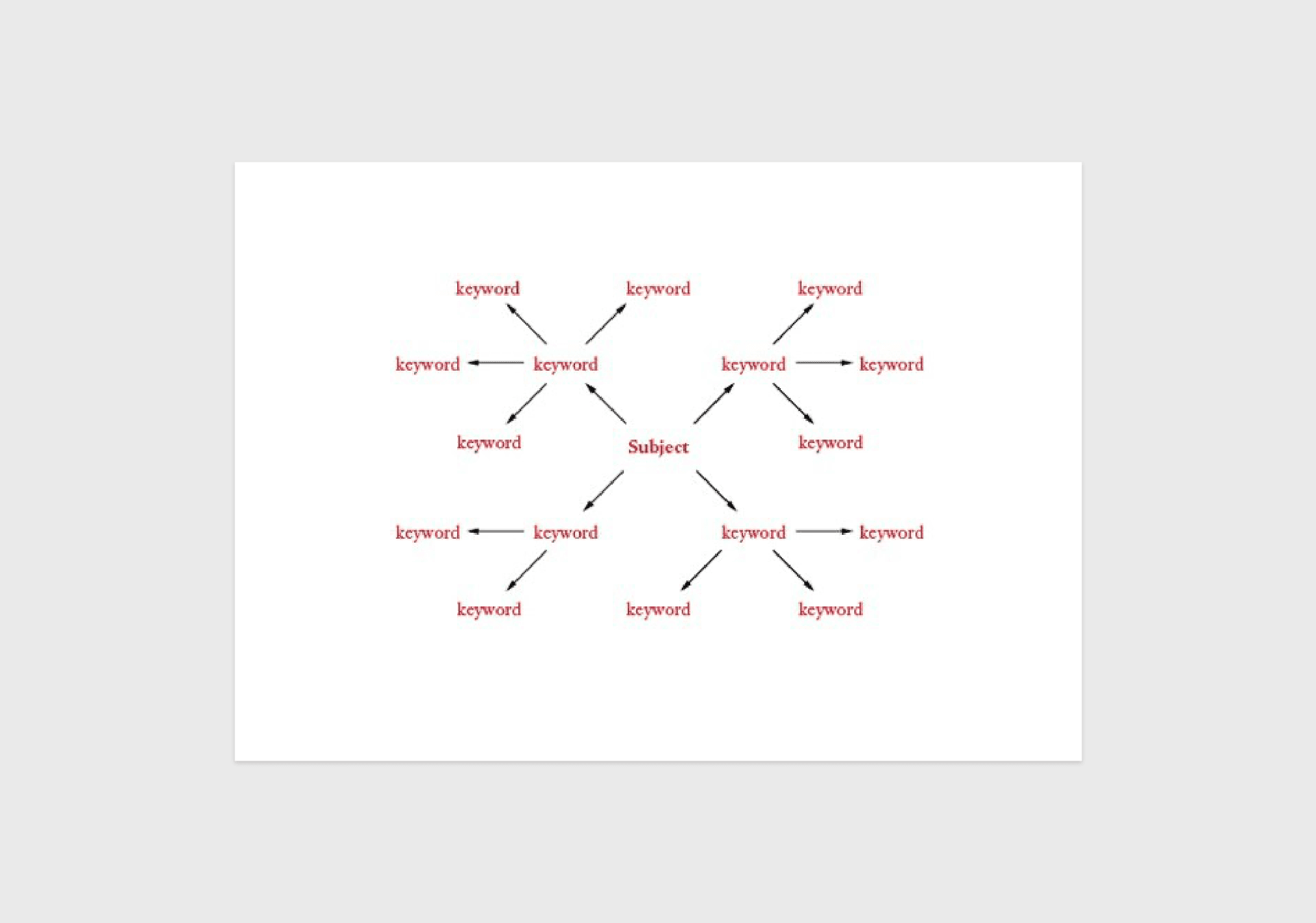
Mind mapping is worth discussing here, as it can be an invaluable asset at this early stage of throwing ideas onto the page. Mind mapping is a graphical variant on brainstorming.
The method was developed by the Englishman Tony Buzan in 1974, based on insights from research on the human brain. He used his research to create a presentation method that addressed both cerebral hemispheres equally — combining linguistic and logical thinking with intuitive and pictorial thinking.
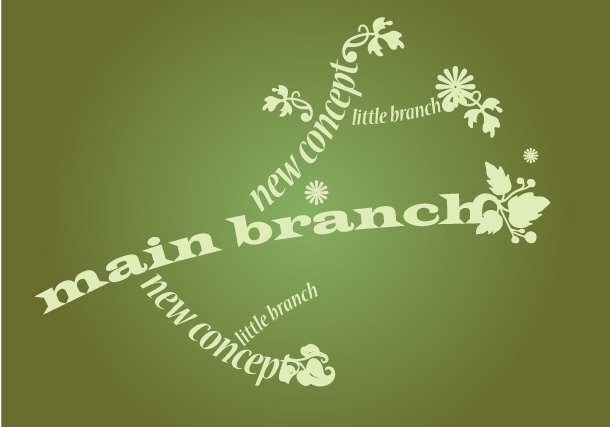
The typical structure resembles a tree: the subject is written in the middle of the page. A succinct, slogan-like word works best here; lengthy sentences aren’t effective at this stage. Keywords spring from your central theme and are written on lines forming the main branches, which can then branch further for subsequent sub-concepts.
If further variations come to mind, an additional branch is added to the appropriate main branch. The resultant mind map can be re-organised and re-structured at any stage. Use this highly effective technique when embarking on your research.
For more on managing the client relationship through all these stages, read Professional Design Practice: Lesson 4 — Dealing with Clients.
For a more in-depth look at mind mapping, see our mind mapping blog article.

In sum…
Carry out exhaustive, though tightly-focused, research. Use mind mapping to help conceive your ideas. And don’t forget to check your progress against the original brief throughout. Do these things and you’ll maximise your chances of presenting something your client will see potential in — and help you avoid getting told off for bouncing off on a tangent.
Want to build the professional practice skills that underpin every client project? Our Certificate IV in Graphic Design covers briefs, research, client management and the full creative process from concept to delivery.
Ready to start your design career?
Study graphic design online, at your own pace, with 1:1 support from our Support Angels. Accredited RTO since 2008.
Explore our courses