apple-logo-shot.png

26 Logos & Their Design Evolution

Originally published 15 March 2014Updated 12 March 20263 min read

26 Logos & Their Design Evolution

Originally published 2014. Updated March 2026.

Some logos are so embedded in daily life that we stop seeing them. The golden arches, the bitten apple, the swoosh — they feel permanent, inevitable. But every one of them started somewhere else.

Below are 26 of the world’s most recognisable logos, traced through their design evolution. Some changes were bold reimaginings. Others were quiet refinements that took decades to land where they are today. Some, frankly, were missteps. You decide.

It’s hard to argue with the Art Pauls and the Paul Rands of the design world — but it’s worth trying.

Why Logos Change

A logo redesign is rarely just an aesthetic decision. Brands rebrand when they enter new markets, respond to cultural shifts, adapt to new media, or simply try to shake off the associations of an earlier era.

The move from detailed, ornate marks to simpler, flatter forms has been the dominant direction over the past two decades — driven partly by digital screens, where fine detail disappears at small sizes, and partly by a broader cultural shift toward minimalism. Since this post was first published in 2014, that trend has only accelerated. Peugeot returned to a heraldic flat lion in 2021. Firefox stripped back its flame in 2019 and again in 2023. Burberry reclaimed its equestrian knight after years of a cleaner wordmark.

The lesson, repeated across every logo here: simplicity ages well. Complexity tends to date.

Adobe

adobe-logo.png
Adobe's logo evolution — from the early stylised 'A' to the clean geometric mark used today across the Creative Cloud suite.

Apple

apple-logo.png
Apple's iconic evolution from rainbow stripes (1977) to the monochrome mark — a case study in how a brand's logo can track its cultural positioning.

AT&T

NL_ATT1.jpg
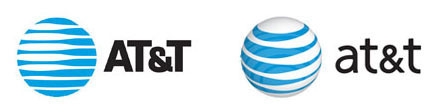
AT&T's globe mark has been refined repeatedly, each iteration cleaner and more suited to digital environments.

Audi

NL_Audi_1.jpg
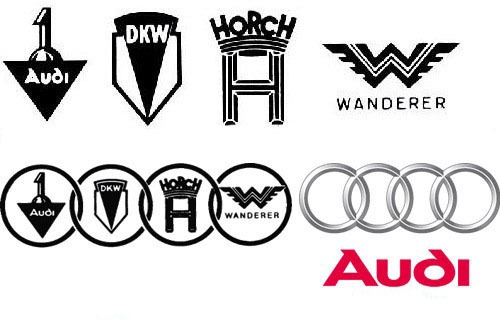
The four rings of Audi represent the four companies of Auto Union — a mark that has changed remarkably little in concept, though the execution has been refined from chrome relief to flat geometry.

Coca Cola

NL_COCA_COLA.jpg
Coca-Cola's script logo is one of design's great constants — though the surrounding packaging and wordmark have shifted with every decade.

The Body Shop

NL_BODY_SHOP.jpg
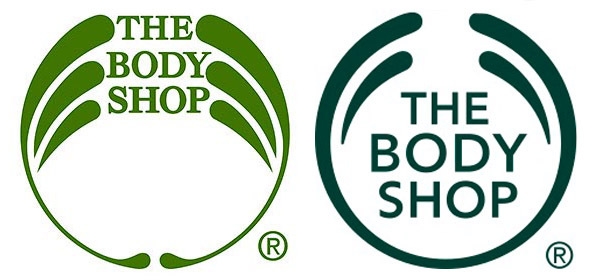
The Body Shop's logo evolution reflects wider shifts in how brands communicate ethics and sustainability through visual identity.

FedEx

NL_FedEx_1.jpg
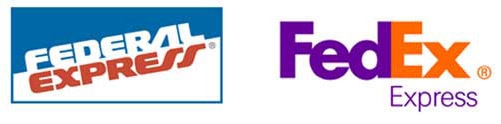
FedEx's 1994 rebrand by Lindon Leader is famous for the hidden arrow between the 'E' and 'x' — a masterclass in negative space. It remains in use today, virtually unchanged.

Fiat

NL_Fiat_1.jpg
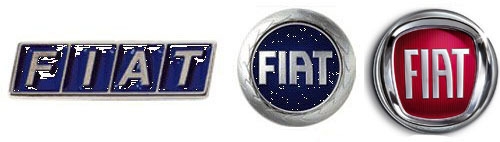
Fiat's logo has gone through several distinct eras, returning to heritage forms in recent years as part of a broader European automotive trend toward brand archaeology.

Ford

NL_ford_1.jpg
Ford's oval has been a constant since 1927. The refinements have been subtle — weight, proportion, colour — but the core form has proved remarkably durable.

IBM

NL_IBM_1.jpg
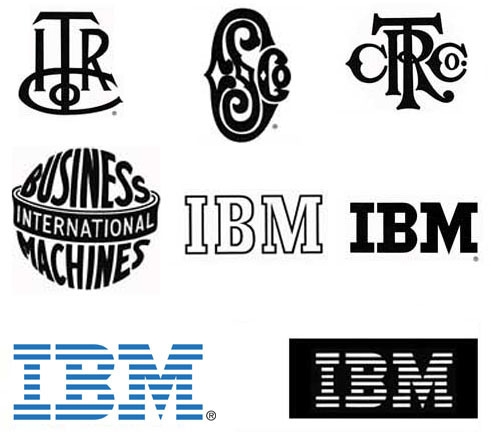
Paul Rand's IBM striped logo (1972) is one of design history's most studied marks — a lesson in how a systematic approach to a simple form can carry enormous authority.

KFC

NL_KFC.png
KFC's Colonel Sanders illustration has been redrawn multiple times, each version more stylised and graphic than the last.

Kodak

NL_KODAK.jpg
Kodak's K-in-a-square mark tells a story of brand confidence — and its eventual dissolution mirrors the company's own journey through the digital transition.

Mist

NL_MIST.jpg
Mist's logo evolution — a smaller brand journey that illustrates the same principles of simplification and modernisation at work.

MSN

NL_msn.jpg
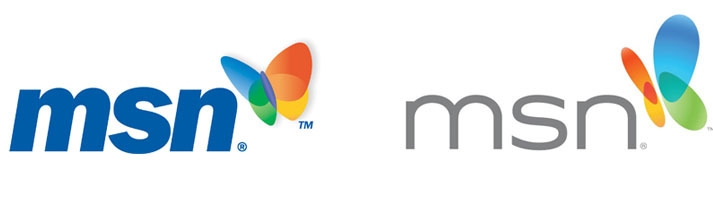
MSN's butterfly logo has been through multiple reconfigurations, tracking Microsoft's shifting approach to its consumer services.

Nike

NL_NIKE_1.jpg
The Swoosh, designed by Carolyn Davidson in 1971 for $35, has barely changed. Its evolution has been about context and application — not the mark itself.

Playboy

NL_PB.jpg
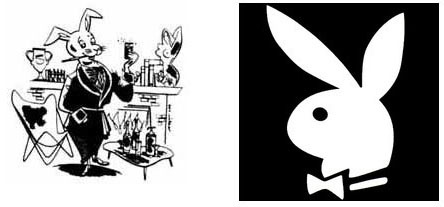
The Playboy Bunny is among the most consistently executed logo marks of the 20th century — a silhouette that has changed very little across six decades.

Peugeot

NL_PEUGEOT_1.jpg
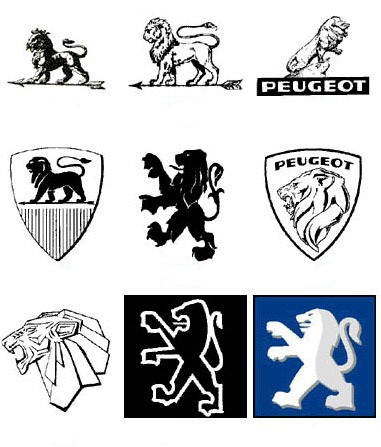
Peugeot's lion has been through more than ten official iterations since 1858. The 2021 version returns to a flat, heraldic form — full circle from the earliest marks.

UPS

NL_UPS.jpg
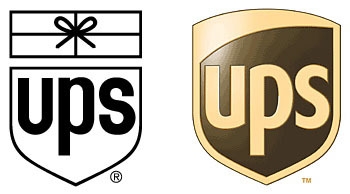
Paul Rand's UPS shield (1961) was a benchmark of corporate identity design. The 2003 rebrand by FutureBrand smoothed the shield and removed the bow-tied package — a controversial update that divided designers.

Starbucks

NL_STARBUCKS.jpg
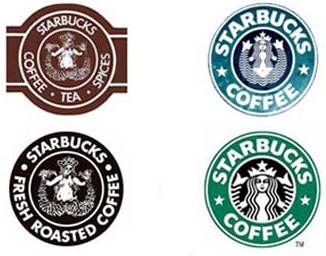
Starbucks' 2011 rebrand dropped the wordmark entirely, placing the siren front and centre — a bold move that only works because the mark had achieved near-universal recognition.

WWF

NL_WWF_1.jpg
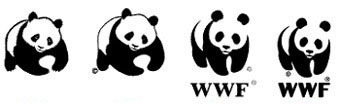
The WWF panda, originally sketched by Sir Peter Scott in 1961, has been refined over the decades. The current flat version is one of the most effective charity marks in existence.

Alfa Romeo

NL-ALFA.jpg
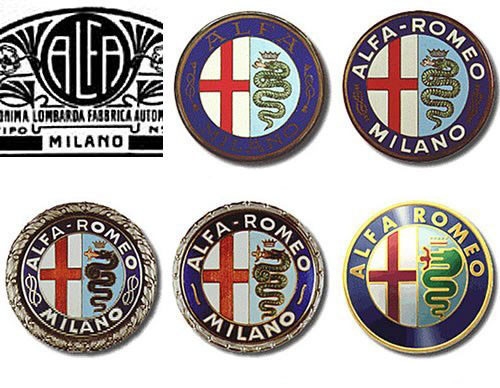
Alfa Romeo's badge is a study in heraldic complexity surviving into the modern era — the cross of Milan and the Visconti serpent, carefully preserved through every automotive rebrand.

Pepsi

NL_PEPSI1.jpg
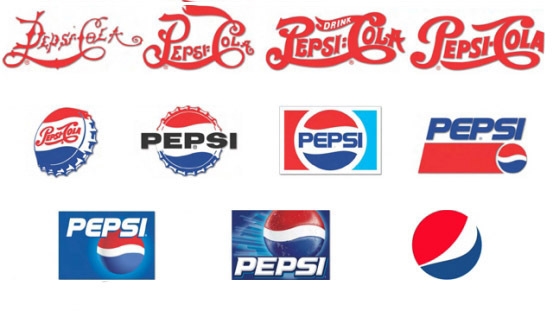
Pepsi has rebranded more aggressively than almost any other major consumer brand — each era attempting to claim a different cultural moment. The 2023 rebrand returns to a bolder, more retro-inflected approach.

Yahoo

NLYahoo_1.jpg
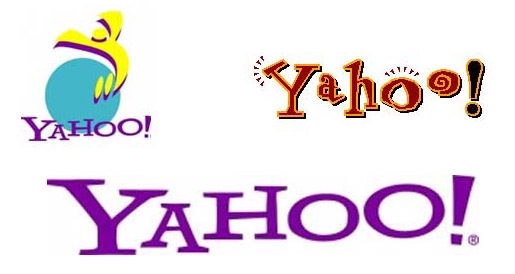
Yahoo's logo evolution tracks the company's search for identity — and the 2013 rebrand, famously unveiled via a daily logo series, became a case study in what not to do with public anticipation.

Internet Explorer

NL_IE.jpg
Internet Explorer's blue 'e' was eventually retired with the browser itself. Microsoft Edge adopted a new wave-based mark in 2019 — letting the old icon become a symbol of an era rather than a brand.

Firefox

NL_FF.jpg
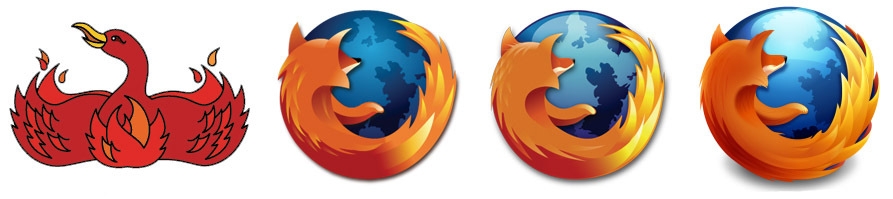
Firefox's flame-wrapped globe has been gradually simplified since 2019. The 2023 iteration introduces a more abstract flame form — still recognisable, but more versatile across digital contexts.

Mazda

NL_MAZDA_1.jpg
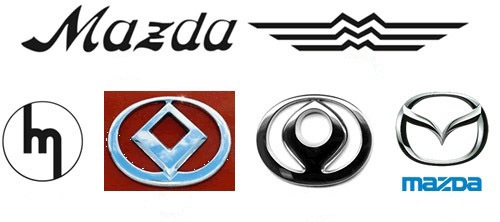
Mazda's 2018 rebrand introduced the Brandmark — an abstract wing form derived from the letter 'M' — replacing the older logo that had served the brand since 1997.

What These 26 Logos Teach Us

Look across these evolution timelines and a few patterns emerge. The most enduring marks are those built on strong, simple geometry — the Nike Swoosh, the FedEx arrow, the Apple silhouette. They reproduce at any size, in any colour, in any medium. The logos that have aged least well are those that chased the aesthetic moment of their era rather than building on a more fundamental form.

The other consistent pattern: companies that understand their own history make better rebrands. Peugeot’s return to heraldry, Alfa Romeo’s preservation of the Milanese cross, Coca-Cola’s unwillingness to abandon its script — these are acts of brand archaeology, not nostalgia.

If you’re studying logo design, it’s worth spending time with each of these families of marks. The decisions behind them — what was changed, what was kept, and why — are as instructive as any textbook.

Curious about the principles behind great logo design? Read our post on 6 things to keep in mind when designing a logo, or explore logo design resources and the work of David Airey.

At The Graphic Design School, logo design is core to the curriculum — not as a set of rules, but as a discipline with a long and genuinely fascinating history. If you want to develop your own approach to identity work, our Certificate IV in Graphic Design covers branding, visual identity, and the thinking behind mark-making.

Ready to start your design career?

Study graphic design online, at your own pace, with 1:1 support from our Support Angels. Accredited RTO since 2008.

Explore our courses

Find us on the Gram

Follow our design inspiration curation (that rhymes) & stay up to date on the latest work from our students

Get Started.

You can enrol any day of the year. We are online and study is self-paced, there is no pressure. Enrol when you are ready to start, from anywhere in the world. If you would like to chat or email, feel free to get in touch.

Brochures, Phone Calls & Questions

You can download a free brochure, book a phone call with one of our course advisors, or simply ask a question.

Other ways to get in touch

Australia 1300 655 485

International +61 1300 655 485

Ask Anything info@thegraphicdesignschool.com

Get a quote accounts@thegraphicdesignschool.com

Acknowledgement of Country
The Graphic Design School acknowledges the Traditional Custodians of Country throughout Australia and their continued spiritual connection to land.
We pay respect to Elders past, present and emerging.
Always was, always will be.
RTO Provider № 91706